




Vitiligo: portraits and testimonials from the EPIDERMIC project
Published 25 Nov 2026 • By Léonie Guerut
Showing a person, their skin and their story. This is the ambition behind EPIDERMIC – Les Cartographies de la Peau, a photographic project dedicated to people living with vitiligo. Behind the project is Nicolas Brulez, a fashion and portrait photographer who has also worked as a psychiatric nurse since 2002, and who wants to bring together photography and listening.
Through portraits taken in an environment chosen by the participants, close-up photographs of their skin and their personal stories, he invites us to discover individual journeys. The way others look at them, treatments, difficulties and paths towards acceptance all have a place, told in the words of those who experience them.
From fashion photography to the stories written on the skin
A fashion and portrait photographer, the creator of EPIDERMIC has been covering Paris Fashion Weeks for many years, both on the runway and backstage. He also creates portraits and reports focusing on craftsmanship and expertise.
Skin has long held an important place in his work. With The Tattoorialist, he travelled through the streets of different countries photographing people with tattoos and collecting the stories behind them. This work led to several books published by Éditions Tana and an exhibition at the D-Museum in Seoul.
With EPIDERMIC, he continues this exploration by focusing on another experience of the skin.
“A tattoo is skin that we choose to draw on. With vitiligo, I wanted to explore skin that we did not choose, and what it means to live with it and the way we see ourselves.”
His intention is to photograph people living with vitiligo with the same care he brings to fashion photography, without hiding their skin or retouching its distinctive features.
Before taking photographs, taking the time to listen
His work as a psychiatric nurse directly influences the way he conducts these encounters. Since 2002, this experience has taught him to listen, respect moments of silence and allow each person to move at their own pace.
“I never start a session with the camera. We start by talking.”
The conversations may focus on discovering the vitiligo, childhood, treatments or the way others look at them. Some people share intimate memories. He therefore makes a point of giving everyone the freedom to choose what they want to talk about.
“My role is to create an environment where people feel they can trust me. The photography comes afterwards, almost naturally.”
This care continues throughout the session. The aim is not to ask participants to reveal more than they wish, but to allow them to take part in the project within their own boundaries.
A portrait, a skin, a voice
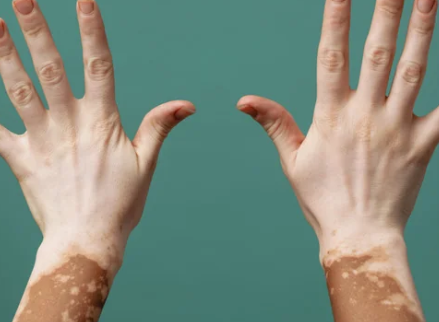
Each contribution brings together three complementary elements: a portrait taken in the person's environment, a close-up photograph of their skin and a written testimonial.
The portrait places the person within their everyday life. It reminds us that before the diagnosis, there is an identity, a story and a life that cannot be reduced to vitiligo.
The close-up image explores the contours of the skin, as if looking at a map. This approach gave rise to the title “Les Cartographies de la Peau”.
Finally, the testimonial allows each person to describe their experience in their own words. The image and the story complement one another, without one replacing the other.
“I would like the public to move from curiosity, which can sometimes be awkward, towards a genuine encounter. To see a person first, then unique skin, then a story.”
Different journeys when facing the way others look at you
What particularly struck him during the first encounters was the diversity of people's experiences. Some had spent a long time trying to hide their vitiligo. Others had quickly incorporated this characteristic into their identity.
He shares the words of one participant:
“I have never hidden myself. Quite the opposite: I feel special.”
Another person told him:
“If I got my original skin tone back, I would think: this isn't me anymore.”
In the stories collected, the way other people look at them often plays an important role, particularly during adolescence. Some participants also mention a lack of information or remember being told that “there is nothing that can be done”.
These words reflect their experiences and the way they received certain messages about the condition. Alongside them are stories of finding peace, rebuilding confidence or still searching for balance.
What Nicolas Brulez remembers most is the strength of the people he has met and the way they live with their differences. The project therefore leaves room for different ways of relating to one's skin, without imposing a single journey.
A session in a place where you feel comfortable
The photographer travels throughout France, either to participants' homes or to a location of their choice. Appointments are grouped by region.
Each session lasts approximately one and a half to two and a half hours. A short questionnaire is sent beforehand to help prepare for the conversation, but everyone is free to complete it or not.
After some time spent talking, the photographs are taken without rushing. There is no need to be used to posing or to feel immediately comfortable in front of the camera.
For those who are hesitant, he has this message:
“You only show what you want to show. Your face, hands, arms or just one part of your body: you decide. We can take a break or stop at any time.”
Participants choose what will be published
Participation is voluntary and free of charge. After the session, each person receives a selection of photographs as well as the text of their testimonial.
They can request changes and approve both the images and the words before anything is published. The skin is never retouched.
An image rights consent form is also signed. The project leader specifies that participants may withdraw their consent.
Giving participants this opportunity to approve the final result allows each person to make sure it reflects them, both in what is shown and in what is told.
An exhibition and a book to continue these encounters
EPIDERMIC – Les Cartographies de la Peau is run by the EPIDERMIC PROJECT association. The project is supported by the Association Française du Vitiligo, as well as the dermatology departments of the university hospitals in Bordeaux and Nice and Saint-Louis Hospital in Paris.
The sessions began in October and are expected to continue until spring 2027. An exhibition is planned around World Vitiligo Day on 25 June 2027, followed by a book.
These formats will extend the encounters by allowing the portraits to be seen and the testimonials to be read beyond the time of each individual session.
How can you take part in the EPIDERMIC project?
The project is open to people living with vitiligo, regardless of their age, region or the extent of their vitiligo. At the time of this interview, around forty volunteers had already expressed an interest in taking part.
To offer to participate or ask questions, you can contact the team:
- Via the EPIDERMIC PROJECT contact form.
- By email at contact@epidermic-project.com.
- On Instagram: @epidermic_project.
Do you live with vitiligo? What role do the way others look at you and photography play in your relationship with your skin? Share your experience in the comments.
 Facebook
 Twitter