






Crohn’s disease, ulcerative colitis, and sleep: Could poor rest increase flares?
Published 13 Feb 2026 • By Somya Pokharna
Living with Crohn’s disease or ulcerative colitis often means managing more than digestive symptoms alone. Fatigue that lingers, nights broken by discomfort or worry, and mornings that never quite feel restorative are part of many people’s daily reality. Yet sleep is still rarely discussed as a meaningful part of inflammatory bowel disease (IBD) management.
Recent research suggests that sleep problems are not just a side effect of living with a chronic condition. Poor sleep may interact with inflammation, stress, and the immune system in ways that influence how the disease evolves over time.
This article explores what science currently says about the relationship between sleep and IBD, why sleep problems are so common, and why addressing sleep is not about control or blame, but about support, prevention, and quality of life.
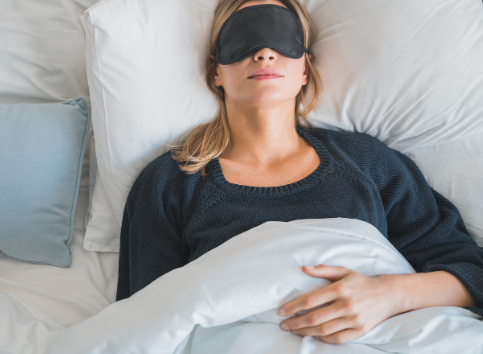
How are sleep and inflammatory bowel disease connected?
Inflammatory bowel disease, often called IBD, is a group of chronic conditions that cause ongoing inflammation in the digestive tract. The two main forms are Crohn’s disease and ulcerative colitis.
IBD symptoms can include abdominal pain, diarrhoea, fatigue, weight changes, and periods of flare-ups followed by remission. Because IBD affects the immune system, its impact is not limited to the gut and can influence energy levels, mood, sleep, and overall quality of life. Sleep, in this context, is not just a background issue. It is closely intertwined with both symptoms and disease activity.
Research increasingly suggests a two-way relationship. Active inflammation can disturb sleep through pain, urgency, nighttime bowel movements, and systemic inflammation. At the same time, poor or fragmented sleep may make the body more vulnerable to inflammation, potentially increasing the risk of flares in some people.
This does not mean that sleep problems cause IBD. Rather, sleep appears to be one piece of a larger, complex puzzle.
How common are sleep problems in people with IBD?
Sleep disturbances are very common in people living with IBD, even when the disease is considered clinically “quiet”.
Studies consistently report higher rates of:
- difficulty falling asleep
- frequent night-time awakenings
- early morning waking
- non-restorative sleep and persistent fatigue
Importantly, many people report poor sleep during remission, not only during flares. This can be confusing and frustrating, especially when test results suggest inflammation is under control. Symptoms such as abdominal discomfort, anxiety about urgency, medication side effects, or ongoing low-grade inflammation may still interfere with sleep quality.
Can poor sleep really increase the risk of a flare?
Several large observational studies suggest that sleep disturbance may be linked to a higher risk of disease activity, particularly in Crohn’s disease.
One well-known prospective cohort study found that people with Crohn’s disease who reported poor sleep while in remission were more likely to experience active disease months later. This association was not consistently observed in ulcerative colitis, highlighting that IBD is not one uniform condition.
These findings should be interpreted carefully. They show increased risk, not certainty. Many people with poor sleep do not relapse, and many flares occur despite good sleep. Still, sleep disturbance may act as a vulnerability factor, especially when combined with stress, smoking, or psychological distress.
What happens in the body when sleep is disrupted?
Sleep plays a critical role in immune regulation. When sleep is fragmented or insufficient, the body’s inflammatory balance can shift.
Research points to several biological mechanisms:
- increased production of pro-inflammatory cytokines
- altered stress hormone regulation
- impaired immune recovery during deep sleep stages
In IBD, where inflammation is already dysregulated, this can create a feedback loop. Inflammation disrupts sleep, and disrupted sleep may make it harder for the body to keep inflammation in check.
This helps explain why sleep problems can feel physically draining, not just mentally exhausting.
Why do stress, anxiety, and low mood matter so much for sleep and IBD?
Psychological distress shows up repeatedly in IBD research as a factor linked to both symptom severity and sleep quality.
Stress, anxiety, and depression can:
- make it harder to fall or stay asleep
- increase pain sensitivity
- worsen fatigue and gut symptoms
- amplify the perception of disease activity
Some studies show that mood symptoms are more closely linked to how severe symptoms feel than to objective inflammation markers. This does not make symptoms “imagined”. It reflects how tightly the brain, gut, and immune system are connected.
Sleep sits at the centre of this interaction. Poor sleep can worsen mood, and low mood can further disrupt sleep.
Are some lifestyle factors more strongly linked to flares than others?
Across studies, certain adjustable factors tend to group together in people who experience more frequent or severe disease activity.
These include:
- sleep disturbance
- high perceived stress
- depression or anxiety
- smoking, particularly in Crohn’s disease
- dietary patterns and nutritional deficiencies
- obesity and low physical activity
Smoking stands out as consistently harmful in Crohn’s disease, while its relationship with ulcerative colitis is more complex and does not outweigh its overall health risks.
Diet and exercise evidence is less clear-cut, but overall patterns matter more than individual foods. Regular movement is generally associated with better sleep, reduced fatigue, and improved quality of life.
How can sleep problems affect daily life beyond gut symptoms?
Poor sleep affects far more than nights. People with IBD and chronic sleep disruption often describe the following:
- persistent daytime fatigue
- brain fog and difficulty concentrating
- reduced emotional resilience
- strain on work, relationships, and self-confidence
Because sleep problems are invisible, they may be underestimated by others, including healthcare professionals. Yet many patients report that fatigue and poor sleep are among the most disabling aspects of the disease.
Should people with IBD talk to their care team about sleep?
Yes. Sleep is still under-discussed in IBD care, despite its impact.
Mentioning sleep problems can help care teams:
- identify untreated pain, anxiety, or medication side effects
- screen for insomnia or sleep disorders
- adjust treatment plans more holistically
Simple questionnaires and targeted questions can provide valuable insight, even when inflammation markers look stable.
What small, realistic steps can support better sleep with IBD?
There is no universal solution, and perfection is not the goal. Many people find it more helpful to focus on gentle, realistic adjustments, especially during stable periods.
These may include:
- addressing night-time symptoms proactively with the care team
- creating a consistent, calming wind-down routine
- managing stress and anxiety around sleep itself
- adjusting expectations during flares or high-stress periods
Importantly, struggling with sleep is not a personal failure. It is a common and understandable response to living with a chronic inflammatory condition.
Key takeaways
- Sleep problems are very common in people with IBD, including during remission
- Poor sleep may increase the risk of flares, particularly in Crohn’s disease
- Inflammation, stress, mood, and sleep influence each other in complex ways
- Sleep disruption affects quality of life, causes fatigue, and impacts emotional well-being.
- Talking about sleep with healthcare providers is an important and valid step
If you found this article helpful, feel free to give it a “Like” and share your thoughts and questions with the community in the comments below!
Take care!
 Facebook
 Twitter
Sources:
Ali, T., Choe, J., Awab, A., Wagener, T. L., & Orr, W. C. (2013). Sleep, immunity and inflammation in gastrointestinal disorders. World journal of gastroenterology: WJG, 19(48), 9231.
Ananthakrishnan, A. N., Long, M. D., Martin, C. F., Sandler, R. S., & Kappelman, M. D. (2013). Sleep disturbance and risk of active disease in patients with Crohn's disease and ulcerative colitis. Clinical Gastroenterology and Hepatology, 11(8), 965-971.
Khanijow, V., Prakash, P., Emsellem, H. A., Borum, M. L., & Doman, D. B. (2015). Sleep dysfunction and gastrointestinal diseases. Gastroenterology & hepatology, 11(12), 817.
Kinnucan, J. A., Rubin, D. T., & Ali, T. (2013). Sleep and inflammatory bowel disease: exploring the relationship between sleep disturbances and inflammation. Gastroenterology & hepatology, 9(11), 718.
Koppelman, L. J., Oyugi, A. A., Maljaars, P. J., & van der Meulen-de Jong, A. E. (2025). Modifiable factors influencing disease flares in inflammatory bowel disease: a literature overview of lifestyle, psychological, and environmental risk factors. Journal of Clinical Medicine, 14(7), 2296.
Qazi, T., & Farraye, F. A. (2019). Sleep and inflammatory bowel disease: an important bi-directional relationship. Inflammatory bowel diseases, 25(5), 843-852.
Rozich, J. J., Holmer, A., & Singh, S. (2020). Effect of lifestyle factors on outcomes in patients with inflammatory bowel diseases. Official journal of the American College of Gastroenterology| ACG, 115(6), 832-840.
Sobolewska-Wlodarczyk, A., Wlodarczyk, M., Banasik, J., Gasiorowska, A., Wisniewska-Jarosinska, M., & Fichna, J. (2018). Sleep disturbance and disease activity in adult patients with inflammatory bowel diseases. Journal of Physiology and Pharmacology, 69(3).
Sobolewska-Włodarczyk, A., Włodarczyk, M., Szemraj, J., Stec-Michalska, K., Fichna, J., & Wiśniewska-Jarosińska, M. (2016). Circadian rhythm abnormalities–association with the course of inflammatory bowel disease. Pharmacological Reports, 68(4), 847-851.
Sofia, M. A., Lipowska, A. M., Zmeter, N., Perez, E., Kavitt, R., & Rubin, D. T. (2020). Poor sleep quality in Crohn’s disease is associated with disease activity and risk for hospitalization or surgery. Inflammatory bowel diseases, 26(8), 1251-1259.