






HIV viral load: What going from detectable to undetectable really means
Published 10 Jul 2026 • By Somya Pokharna
In HIV care, viral load is much more than a number on a blood test. It is one of the main ways to understand how active the virus is in the body and how well treatment is working.
A change in viral load can raise questions, bring reassurance, or sometimes cause worry, especially when terms like “detectable”, “undetectable”, and “U=U” are involved. This article explains what viral load means, how it is used in HIV follow-up, and what going from detectable to undetectable can mean for health, treatment, and transmission.
What is HIV viral load?
HIV, or human immunodeficiency virus, is a virus that attacks the immune system, especially CD4 cells, which helps the body fight infections. If untreated, HIV can progress to AIDS (acquired immunodeficiency syndrome), the most advanced stage of the infection, where the immune system is severely damaged, and life-threatening infections can occur. With effective treatment, HIV can be controlled, allowing many people to live long and healthy lives.
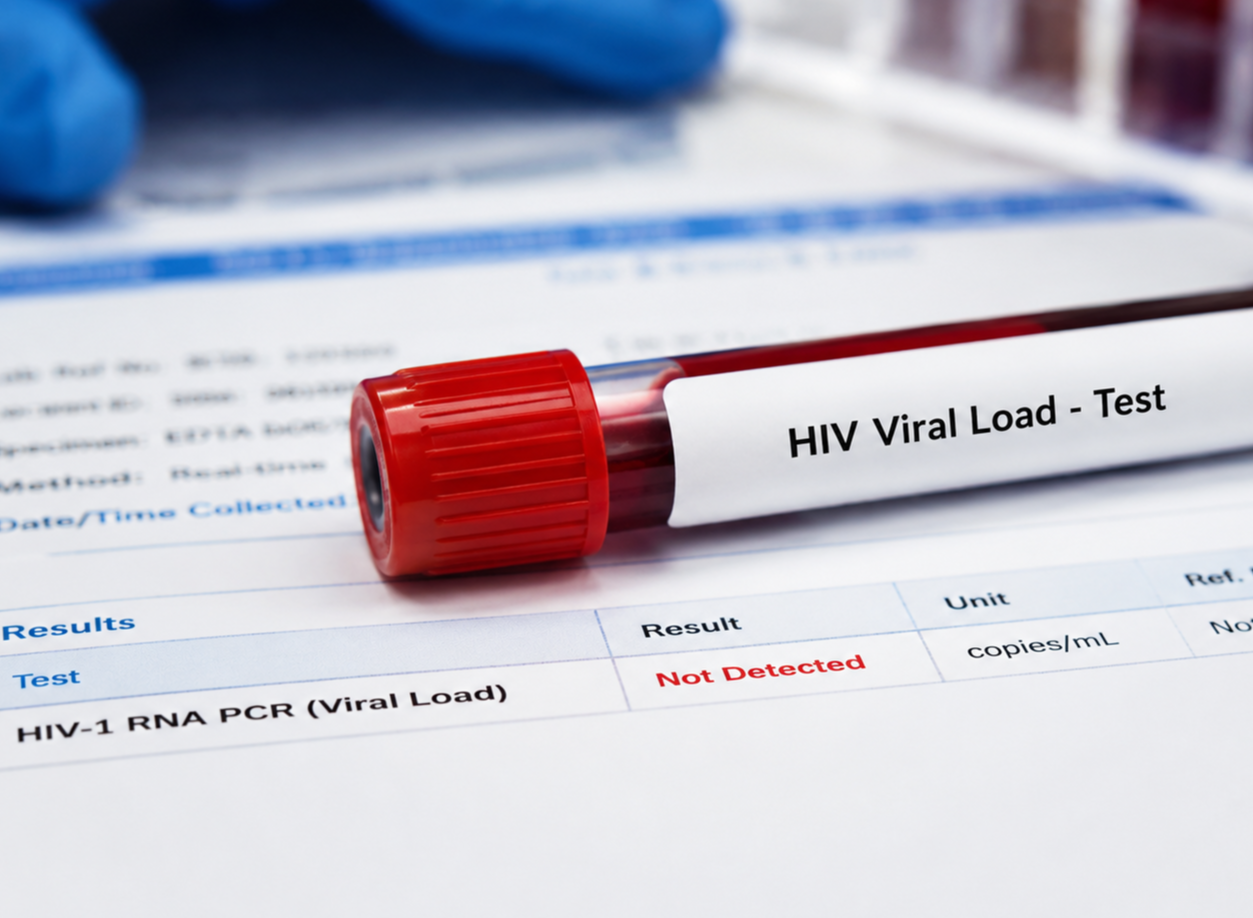
HIV viral load refers to the amount of HIV genetic material, called HIV RNA, found in a blood sample. It is usually measured in copies per millilitre, written as copies/mL. In simple terms, it estimates how much virus is circulating in the blood at the time of the test.
Without treatment, HIV can make copies of itself inside immune cells, especially CD4 cells. Over time, this can increase viral load and weaken the immune system. Antiretroviral therapy, often called ART, works by stopping HIV from multiplying. When treatment is effective, viral load falls.
A viral load result may be described as:
- Detectable, meaning the test can measure HIV in the blood.
- Suppressed, meaning HIV is present at a very low level.
- Undetectable, meaning the amount of HIV is so low that the test cannot detect it.
“Undetectable” does not mean HIV has disappeared from the body. HIV can remain hidden in cells and tissues, which is why treatment needs to continue even when viral load is undetectable.
Why is viral load important?
Viral load is one of the main ways healthcare professionals monitor HIV treatment. It helps show whether ART is controlling the virus and whether extra support or a treatment review may be needed.
Viral load monitoring can help show:
- whether treatment is working
- whether HIV has become suppressed or undetectable
- whether a detectable result is temporary or part of a pattern
- whether issues such as missed doses, interactions, side effects, or resistance may need to be explored
A single detectable result is not always a crisis. It needs to be understood in context, alongside previous results, treatment history, other blood tests, and the person’s daily reality.
What does “undetectable” mean?
An undetectable viral load means the amount of HIV in the blood is too low for the test to measure. The exact cut-off depends on the laboratory test, but many tests define undetectable as below about 20 to 50 copies/mL.
This is an important treatment goal. For many people, taking ART as prescribed can reduce viral load to undetectable levels within several months, although timing varies.
Undetectable means treatment is controlling HIV very effectively. It does not mean HIV has been cured. If treatment is stopped, the virus can start multiplying again, and viral load may rise.
What is U=U?
U=U stands for undetectable equals untransmittable. It means that a person living with HIV who takes effective treatment and maintains an undetectable viral load does not transmit HIV to sexual partners.
This message is important because HIV stigma is often shaped by fear and outdated information. U=U helps replace that fear with clear scientific evidence.
A few points are important:
- U=U applies to sexual transmission when an undetectable viral load is maintained.
- Treatment must continue for viral load to stay suppressed.
- Regular monitoring is still needed.
- U=U does not prevent other sexually transmitted infections.
- Pregnancy, birth, breastfeeding, or injecting drug use require specific medical guidance.
For many people, U=U can affect more than lab results. It may influence confidence, relationships, intimacy, and conversations about HIV status.
What if viral load is detectable?
A detectable viral load means HIV has been found in the blood by the test. This can happen for different reasons, and it does not automatically mean someone has done something wrong.
Sometimes a person with previously undetectable results may have a small temporary increase, known as a viral blip. This can happen even when treatment is being taken correctly. Healthcare professionals usually look at the pattern over time rather than one isolated result.
A persistent or rising viral load may need closer attention. Possible reasons include missed doses, drug interactions, side effects, absorption problems, or drug resistance. Life circumstances, mental health, stigma, unstable housing, or treatment fatigue can also make taking medication harder. These are care issues, not moral failures.
Viral load and CD4 count: What is the difference?
Viral load and CD4 count are both used in HIV care, but they measure different things.
- Viral load shows how active HIV is in the blood.
- CD4 count gives information about immune system strength.
- ART aims to lower viral load, which helps protect CD4 cells over time.
When treatment works well, viral load usually falls first. CD4 count may improve more gradually, depending on the person’s health, timing of diagnosis, and treatment history.
FAQ
What is a good viral load for HIV?
The goal of HIV treatment is usually to reduce viral load as much as possible, ideally to an undetectable level.
Does undetectable HIV mean HIV is gone?
No. Undetectable means HIV is too low to be measured by the test used. Treatment still needs to continue.
Can someone with an undetectable viral load transmit HIV?
A person who maintains an undetectable viral load through treatment does not transmit HIV to sexual partners. This is known as U=U.
What is a viral blip?
A viral blip is a small, temporary, detectable viral load after previous undetectable results. It does not always mean treatment has stopped working.
How often is viral load tested?
Testing frequency depends on the stage of care, treatment history, local guidelines, and individual circumstances.
If you found this article helpful, feel free to give it a “Like” and share your thoughts and questions with the community in the comments below!
Take care!
 Facebook
 Twitter
Sources:
HIV.gov. Viral suppression and an undetectable viral load.
HIV.gov. HIV treatment as prevention.
NIH ClinicalInfo. Plasma HIV-1 RNA viral load and CD4 count monitoring.
CDC. Undetectable equals untransmittable.
WHO. New WHO guidance on HIV viral suppression and scientific updates released at IAS 2023.
Broyles, L. N., et al. The risk of sexual transmission of HIV in individuals with low-level HIV viraemia: a systematic review. The Lancet, 2023.