





Sharing a bed with sleep apnea: How can couples sleep better?
Published 23 Feb 2026 • By Candice Salomé
Sharing a bed with someone may seem simple, but when one partner lives with sleep apnea, nights can quickly become challenging. Between snoring, breathing pauses, and frequent awakenings, sleep apnea doesn’t just disrupt rest, it can also affect intimacy, closeness, and each partner’s mood.
This article explores how sleep apnea impacts couples, the difficulties both partners may face, and practical solutions to help you sleep better together while protecting your health, rest, and relationship. Through concrete advice, you’ll discover how to turn this night-time challenge into a calmer, more manageable routine for both of you.
Understanding sleep apnea and its impact on couples
What is sleep apnoea?
Sleep apnoea is characterised by repeated interruptions in breathing during the night. These pauses reduce oxygen levels in the blood and briefly wake the sleeper, often without them even realising it.
Consequences for the partner
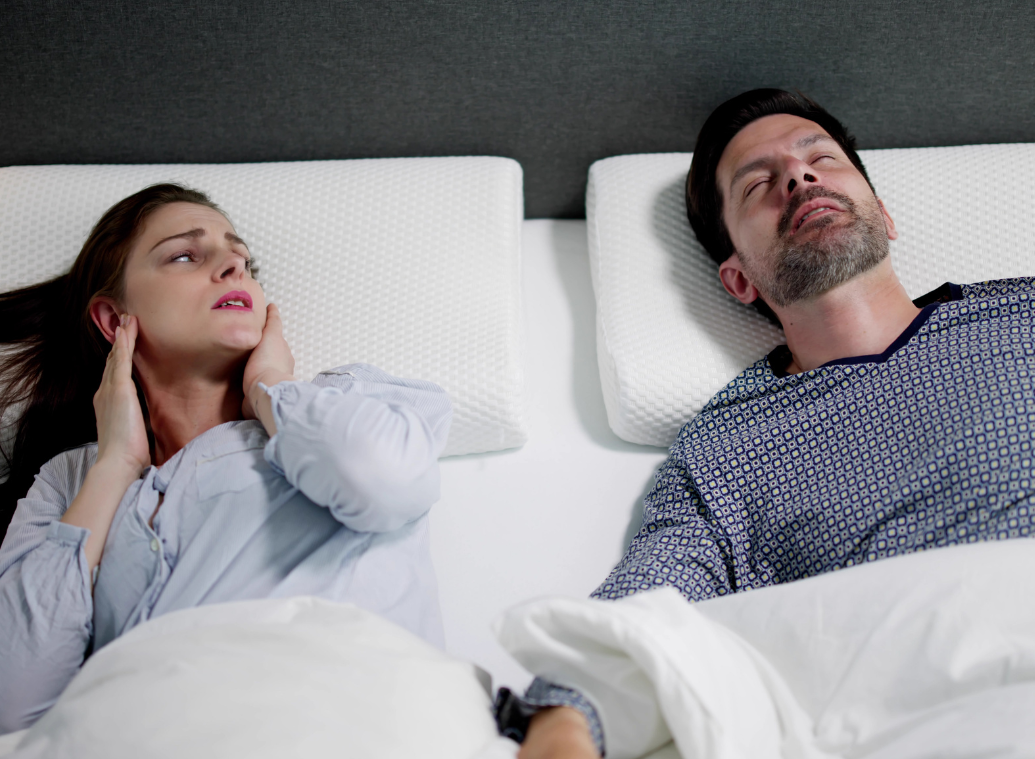
For the partner, this often means loud snoring, sudden movements in bed, and an involuntary state of alertness that prevents restorative sleep. The accumulated fatigue experienced by both partners can lead to irritability, stress, and tension within the relationship.
Impact on intimate life
These night-time disruptions can also affect intimacy. Chronic fatigue reduces sexual desire and the ability to share moments of closeness. Partners of people with sleep apnoea frequently report significantly poorer sleep quality and reduced relationship satisfaction linked to lack of rest.
The challenges of shared sleep
Frequent awakenings and fatigue
Sleeping next to a partner with sleep apnoea often means coping with repeated awakenings and fragmented nights. Disrupted sleep cycles affect mood, concentration, and overall health.
Relationship tension
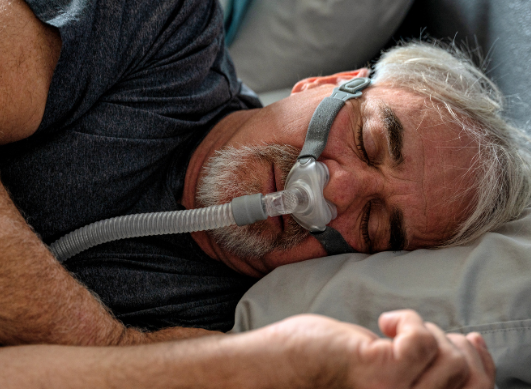
Night-time stress can lead to frustration and strain that spills over into the relationship. Even when the person with sleep apnoea uses treatment such as CPAP (continuous positive airway pressure), the sound of the machine or wearing the mask may still disturb the partner.
Emotional distance and intimacy
Sleep apnoea can create a subtle emotional distance within a couple. Some partners choose to sleep in separate beds, which may reduce night-time conflict but requires open communication to avoid harming intimacy and closeness.
Strategies for sleeping better together
Bedroom adjustments
Slightly separating the beds or choosing a larger mattress can reduce disturbances caused by movement during the night. Keeping the bedroom dark, quiet, and well-ventilated also helps improve sleep quality for both partners.
Medical devices
CPAP therapy remains the most effective treatment for reducing apnoea episodes and snoring. Dental devices or, in some cases, surgical procedures may also improve night-time breathing. Adjusting sleep position, especially avoiding sleeping on the back, can reduce apnoea episodes.
Habits and communication
Healthy routines benefit both partners. Avoiding alcohol before bedtime and maintaining consistent sleep schedules can improve rest.
Openly discussing difficulties, frustrations, and feelings helps couples find solutions together. Considering temporary alternatives, such as sleeping separately for a few nights, can protect sleep without damaging the relationship, as long as communication remains honest and respectful.
When should you consult a professional?
Recognizing warning signs
Both partners should remain attentive to signs of excessive fatigue, irritability, or mood changes.
The importance of medical follow-up
Consulting a sleep specialist allows for proper assessment of the severity of sleep apnoea and identification of the most appropriate treatment. Regular medical follow-up not only improves the patient’s health but also reduces the impact on the partner and helps preserve the balance of the relationship.
Conclusion
Sleeping together when one partner has sleep apnoea can be challenging, but it is not insurmountable. Combining effective medical treatment, bedroom adjustments, behavioural changes, and open communication can significantly reduce night-time disruptions and protect the relationship.
By taking both partners’ needs into account, it is possible to regain restorative sleep and maintain shared intimacy despite sleep apnoea.
If you found this article helpful, feel free to give it a “Like” and share your thoughts and questions with the community in the comments below!
Take care!
 Facebook
 Twitter
Sources :

Comments
You will also like

Fighting schizophrenia symptoms: a long journey against paranoia after detainment and denial
12 Dec 2018 • 7 comments