






When treatments cause sweating: a little-known side effect
Published 11 Jul 2026 • By Candice Salomé
Sweating more than usual for no apparent reason can be confusing. Some people notice heavy sweating at night, while others experience excessive sweating during the day, sometimes after starting a new treatment. This phenomenon, which is often bothersome in daily life, remains little known. In fact, several medicines can alter the functioning of the sweat glands or affect body temperature regulation.
Understanding why certain treatments cause sweating makes it easier to recognise this side effect and talk about it more openly.
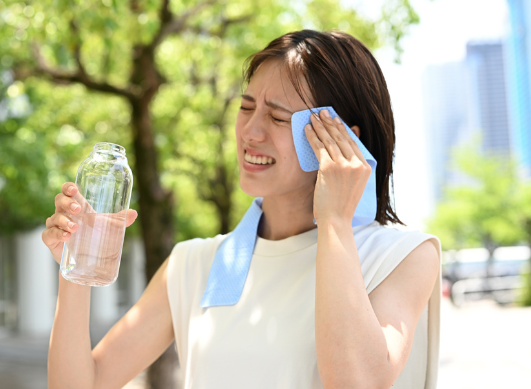
Why do certain medicines cause excessive sweating?
Sweating: A natural regulatory mechanism
Sweating is a normal phenomenon that allows the body to regulate its temperature. It depends on the autonomic nervous system, which controls many automatic functions such as heart rate and sweating.
When this system is stimulated or disrupted, sweat production may increase.
A side effect linked to various mechanisms
Some medicines act directly on the neurotransmitters involved in thermoregulation, such as serotonin or noradrenaline.
Others affect metabolism, blood circulation, or hormones, which can also promote sweating.
Severity varies widely from person to person
Not everyone taking the same medicine experiences this side effect. The severity of sweating can vary depending on the dose, individual sensitivity, drug interactions, or overall health.
This variability explains why some people are greatly bothered by it while others experience no change at all.
Which medicines are most commonly involved?
Antidepressants and medicines that affect the nervous system
Antidepressants are among the medicines most commonly associated with increased sweating, particularly those that affect serotonin.
Medicines frequently implicated include paroxetine (Seroxat®), sertraline (Lustral®), and venlafaxine (Alventa®).
Certain neurological or psychiatric treatments may also be involved, such as duloxetine (Cymbalta®).
Hormone therapy and certain long-term medicines
Hormone therapy, particularly that used for certain hormone-dependent cancers or during menopause, can cause hot flushes and heavy sweating.
This is notably the case with tamoxifen (Tamoxifen®) and anastrozole (Arimidex®).
Certain diabetes medicines can also cause sweating, particularly when they promote hypoglycaemia, such as insulin glargine (Lantus®, Abasaglar®, Toujeo®).
Painkillers and other medicines
Certain painkillers, particularly opioids, are known to cause excessive sweating in some people.
Tramadol (Brimisol®, Zamadol®, Zydol®), morphine (Morphgesic®, Sevredol®, Zomorph®), and oxycodone (OxyContin®, Oxycodone®) may be among them.
Other cardiovascular or neurological medicines can also affect thermoregulation, such as certain beta-blockers or treatments for Parkinson’s disease.
A sometimes significant impact on quality of life
Consequences for daily life
Excessive sweating can have a tangible impact on daily life: discomfort, having to change clothes more frequently, sleep disturbances due to night sweats, or social embarrassment.
Some people also report fatigue related to repeated nighttime awakenings.
A side effect that can sometimes be difficult to identify
Since sweating can have many causes, the link to a medicine is not always obvious.
Some people live with this side effect for a long time before realising it may be related to their treatment.
The risk of stopping treatment
When it becomes too bothersome, this side effect can sometimes lead some people to change or stop their treatment without medical guidance.
This underscores the importance of recognising and taking into account the real impact of these symptoms on daily life.
What solutions and management options are available?
A complete assessment of symptoms
Management depends first and foremost on identifying the cause. It is important to assess whether the sweating is related to the treatment itself, to another medical condition, or to several associated factors.
This analysis helps to better understand the origin of the symptom.
Adjustments may sometimes be possible
Depending on the situation, various strategies may be considered: adjusting doses, switching to a different medicine, or targeted treatment for excessive sweating.
Certain non-pharmacological approaches, such as adjusting clothing or the thermal environment, can also help improve comfort.
Greater awareness of this side effect
For a long time, medicine-induced sweating was considered a “minor” side effect. However, its impact on sleep, quality of life, and self-esteem can be significant.
Today, this aspect is given greater consideration in the management of chronic conditions.
FAQ – Medicine and sweating
Which medicines can cause sweating?
Antidepressants, certain painkillers, hormone therapies, and cardiovascular medicines are frequently involved.
Why do antidepressants cause sweating?
Because they alter certain neurotransmitters involved in thermoregulation.
Can night sweats be related to medicine?
Yes, several medicines can cause heavy sweating at night.
Is excessive sweating dangerous?
It is usually harmless, but can be very bothersome in daily life.
Are there any solutions?
Yes, various treatment adjustments or comfort measures can sometimes be recommended depending on the situation.
If you found this article helpful, feel free to give it a “Like” and share your thoughts and questions with the community in the comments below!
Take care!
 Facebook
 Twitter
1 comment